


2026.08.31 Leaving Fingerprints

I asked ChatGPT, “If I died and a stranger found this phone, and they asked about its owner, based on everything you know about me, what would you tell them?"
I’d tell them her name was Elle.
She was funny as hell—smart, sharp, irreverent, and gloriously incapable of tolerating bullshit. She swore like punctuation, loved with her whole body, and could make you laugh even when everything was falling apart.
I’d tell them she was a fierce advocate. Professionally, she helped people navigate some of the biggest, messiest decisions of their lives—and she cared deeply about getting it right. She was generous with her time, but she was learning that being generous didn’t require being endlessly available. She believed people deserved honesty, clarity, and someone willing to speak up when a system—or a person—was failing them.
Her greatest teacher was her mom.
Elle spent more than seven years caring for and fighting for her through Alzheimer’s. She learned everything by trial and fire: how to ask better questions, document everything, push back, make impossible decisions, survive anticipatory grief, and keep loving someone while losing them. Her mom died on Christmas Eve in 2022, but Elle never stopped carrying her. She was writing a book—None of Us Gets Out of Here Alive—because she wanted other caregivers to know what they didn’t know. She wanted to give them the guidance she never had, so they could navigate dementia with more clarity and less fear—and without disappearing inside the caregiving role.
I’d tell them she loved Brent. She worried about him, teased him, wanted him to use his damn CPAP, and refused to let him accept pain and limitation as his inevitable future.
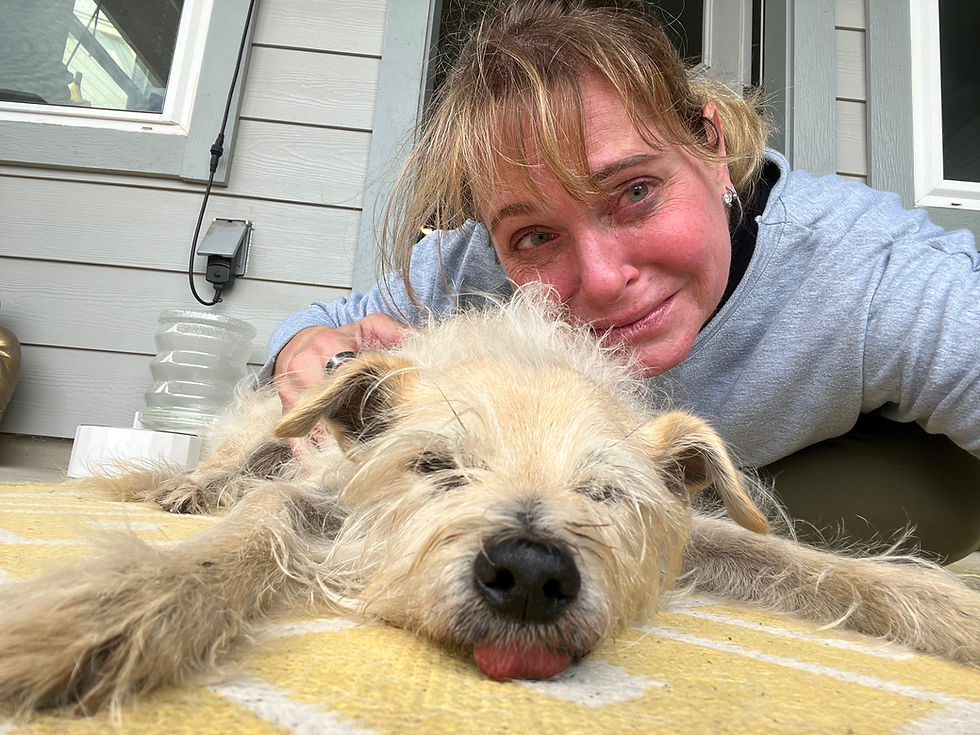
She loved Nelson, even though he was ninety pounds of reactivity, emotional complexity, and occasional orthopedic sabotage. He was His Lordship, and she remained his loyal staff despite having every reason to file an HR complaint.
She loved her plants. She talked to them, praised their new growth, and waged a profane, deeply personal war against mealybugs. One pothos had belonged to her parents, and keeping it alive wasn’t just gardening—it was devotion. She fed the hummingbirds, too, and knew perfectly well they considered her tardiness a personal betrayal.
She wanted things to be beautiful: hair, skin, homes, documents, gardens, words. But she wasn’t shallow. Beauty was one of the ways she created order, pleasure, and hope in a world she understood could be brutally unfair.
She was still becoming. She was growing her hair out, getting stronger, preparing for another surgery, planning a birthday trip, raising money to end Alzheimer’s, working toward the best shape of her life at fifty-five, and building something meaningful from everything she had survived. She had lost people she loved, endured grief and exhaustion, and still kept making plans.
That may be the most important thing about her: she kept making plans.
She cared intensely. She noticed everything. She demanded competence. She could be impatient, tender, furious, ridiculous, practical, sentimental, and devastatingly perceptive—sometimes within the same five-minute conversation. She didn’t merely want to be reassured; she wanted the truth, intelligently considered and clearly stated.
And if this stranger was holding her phone, I’d tell them:
Please find Brent. Make sure Nelson is safe. Water the plants—but for the love of God, inspect them for mealybugs first.
And understand that this phone belonged to someone who mattered enormously. Someone who made people feel protected, understood, entertained, and braver.
Her name was Elle.
And she loved fiercely enough to leave fingerprints on everything.


Comments